An increasing number of people are turning to “alternative” sources when they have questions about their health. According to a 2025 Pew Research Center study(1), 40% of adults and about half of adults under the age of 50 in the U.S. report that they get health and wellness information from podcasts or influencers.
While that’s great news for health and wellness podcasters, it may not be as great for listeners. Why? Because both the people giving the information and the information itself may not be reliable. Anyone can claim to be an “expert,” but not everyone is an expert, and unfortunately, listeners don’t can’t always tell the difference between scientific fact and sludge (these days, it might well be AI sludge).
The American Academy of Orthopaedic Surgeons (AAOS) launched the OrthoInfo podcast in January 2026 to address this challenge specifically in the orthopaedic realm — to serve as an antidote to the toxicity of health misinformation.
Let me back up a step. AAOS has offered online patient education content for nearly two decades. It originated as Your Orthopaedic Connection in the late aughts, and in 2018, it morphed into OrthoInfo — a robust musculoskeletal patient education website offering mostly text content about MSK conditions, nonsurgical and surgical treatments, recovery from injuries and surgery, bone health, and more. Though it seemingly goes against the most basic tenant of content strategy, OrthoInfo was designed for dual audiences:
• Patients and caregivers typing questions into search engines about symptoms, a diagnosis, a recommended treatment, or how to prevent bone and joint issues
• Physicians and other healthcare professionals seeking trustworthy, easy-to-understand information to provide their patients
OrthoInfo’s mission: To empower patients to engage with their care team and make more informed decisions about their care. That mission is rooted in research that shows patients who are better informed tend to be more satisfied with both their care team and their outcomes; and have fewer post-surgery complications and hospitalizations.
Leaning into that mission, AAOS printed OrthoInfo prescription pads and distributed them to member physicians. The physician and team members could then write specific article names on a prescription, tear it off the pad, and give it to the patient in clinic. Patients and their families or caregivers could then visit the website and look up their prescribed articles at their leisure.
When I became Managing Editor in 2021, I immediately began incorporating OrthoInfo-as-prescription messaging into promotional materials. I brought prescription pads to the AAOS Annual Meeting each year, and invariably there were members who sought out our booth to grab a stack. Even as online health information proliferated, the idea of handing patients a paper Rx continued to resonate. By 2021, we were no longer printing the pads due to rising costs, but the concept of prescribing OrthoInfo content remained front and center. Instead of handing patients a script, doctors can download and print articles to disseminate in clinic, send patients article URLs electronically, or use QR codes to direct patients to the website.
Fast forward to early fall 2025. We were starting a podcast. We had discussed it with our Editorial Board and created a podcast workgroup. We budgeted for the recordings. We knew we wanted to feature orthopaedic surgeons talking to each other, and we had some compelling topic ideas. What we lacked were an overarching strategy and a clear identity — not only “why should anyone listen to your podcast,” but the existential question, “why should your podcast exist?” What was the one thing that ran through all episodes and held them together as a cohesive product?
I was attending the virtual 2026 Health Podcast Summit in October when one of the presenters said something that became my “aha” moment. I’m paraphrasing here, but the essence was this: You don’t start a podcast, you add a podcast. Meaning, you already have an established brand, and the podcast becomes an extension of that brand.
We’ve deliberately chosen to use “prescribe” rather than “recommend” to reinforce the fact that the OrthoInfo podcast is trustworthy medical information developed by doctors...
Everything snapped into place. OrthoInfo was an established brand. We had various content types — articles, PDF handouts, videos/animations. It stood to reason that the next logical addition was a podcast, and that the OrthoInfo podcast would therefore have the same raison d'être: providing trustworthy answers to patients’ questions.
We launched with three episodes in mid-January 2026 and have produced monthly episodes since. Each episode starts with a single question — “What’s causing my back pain?” “How Does Menopause Affect MSK Health?” “I Have a Fragility Fracture: Now What?” The host and guest use that question as jumping-off point to provide comprehensive yet easy-to-understand information. By the end of each episode, the titular question has been answered, and listeners hopefully walk away with both a better general understanding of the topic and follow-up questions for their doctor that are specific to their unique case.
This is the exact premise of OrthoInfo’s other content types. And the same prescribe-ability (yes, I know that’s not a real word) applies. Just as doctors and providers can prescribe OrthoInfo articles, handouts, and videos, they can prescribe podcast episodes. This became a key component of marketing the podcast to AAOS members: “Prescribe this episode to your patients who prefer to get their health information in an audio format,” and “Just as you do with OrthoInfo articles, you can prescribe relevant podcast episodes to your patients by sharing links in an after-visit summary or patient portal.”
We’ve deliberately chosen to use “prescribe” rather than “recommend” to reinforce the fact that the OrthoInfo podcast is trustworthy medical information developed by doctors, shared with patients by their doctor for the express purpose of educating them about their MSK problem, treatment options, what to expect during recovery, when they can return to activities, potential complications, etc.
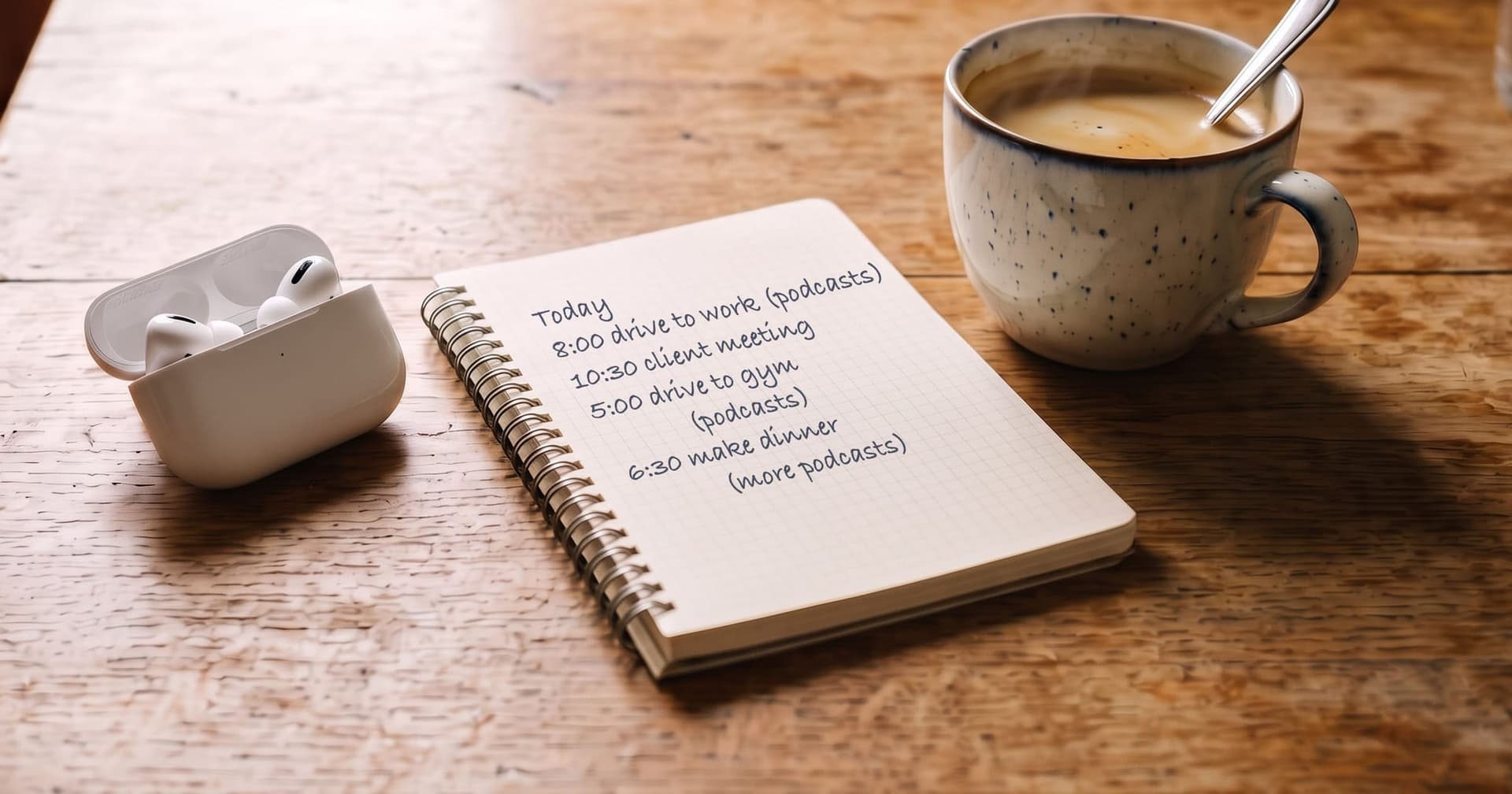
The benefit of being able to prescribe podcast episodes to patients is the same as the benefit for anyone listening to a podcast: You can do it while doing other things.
Driving to work? Check.
Walking the dog? Check.
Doing household chores? Check.
It’s hands-free and your eyes aren’t glued to a piece of paper or a screen. For people who are time poor and frequently multitask, it’s the ideal format: portable, compact, easy to digest.
In a perfect world, disreputable content creators wouldn’t be able to spew untruths masquerading as accurate health information. We don’t live in a perfect world, and we may never see a time when snake oil salespeople are prohibited from publishing misleading or false claims. To cut through the noise, do your research and look for reputable podcasts, such as those produced by professional societies, hospitals, and licensed healthcare professionals.
And for healthcare professionals who want to start offering patients an alternative to written or video patient education, repeat after me: “Take one podcast and call me in the morning.”
Sources
1. Moms, Coaches, Doctors, Entrepreneurs: Who Are America’s Health and Wellness Influencers? https://www.pewresearch.org/data-labs/2026/05/07/moms-coaches-doctors-entrepreneurs-who-are-americas-health-and-wellness-influencers/